
The origins of Tibetan Buddhist deities stem from a complex fusion of Indian Buddhist tantra and indigenous Tibetan Bon religion, characterized by cultural assimilation and religious transformation. Below is a systematic breakdown of their historical development:
1. Bon Foundation: Animistic Nature Worship
Tibetan Buddhist deities trace their roots to the primal Bon religion, which worshipped natural spirits (mountain, water, and fire deities) and upheld a structured pantheon, including:
- Four Great Mountain Deities: Yarlha Shampo (Central Tibet), Nyenchen Thanglha (Northern Tibet), Kulha Kangri (South), and Wojé Gungyal (East). Originally tribal guardians, these deities later became regional protectors.
- Five Lifelong Guardians: Each Tibetan is believed to be protected from birth by five Bon deities—Srog Lha (Life God), Pho Lha (Father God), Ma Lha (Mother God), Shang Lha (Uncle/Local God), and Dgra Lha (Enemy/Home God)—attached to specific body parts.
2. Buddhist Integration: The “Conversion Pact”
After Buddhism’s introduction in the 7th century, Padmasambhava (8th century) negotiated with Bon spirits to assimilate them into Buddhism:
- Subduing Bon Deities: Bon mountain gods (e.g., Yarlha Shampo) and nature spirits (e.g., the Twelve Tenma Goddesses) were redefined as Buddhist protectors. For instance, Yarlha Shampo’s snow lion emblem was engraved on Samye Monastery’s prayer wheels.
- Ritual Transformation: Bon blood sacrifices were replaced with butter lamp offerings; divination practices evolved into prayer wheel rotations; and burial talismans were reborn as tsa-tsa (clay Buddha figurines).
3. Localization of Indian Tantric Deities
Tibetan Buddhism’s core deities originated from Indian Vajrayana but were reshaped to align with Bon cosmology:
- Wrathful Deities: Mahakala (originally Hindu) and Hayagriva (Avalokiteshvara’s fierce form) were adopted for their demon-subduing roles, resonating with Bon’s emphasis on protective power.
- Female Deities: Tara (born from Avalokiteshvara’s tears) and Palden Lhamo (a Hindu goddess’s daughter) merged Indian tantric traditions with Bon mother-goddess worship (e.g., Shesa Nam).
4. Sectarian Diversification
Post-10th century, Tibetan Buddhist schools developed unique deity systems:
- Nyingma School: Venerated Padmasambhava as the “Second Buddha,” with protector deities like King Gesar emerging from terma (hidden teachings).
- Gelug School: Focused on meditational deities like Guhyasamaja, reflecting a synthesis of scholasticism and tantra.
Conclusion
Tibetan Buddhist deities embody a “dual genetic recombination”—Indian tantric philosophy cloaked in Bon imagery, while Bon animism was elevated through Buddhist compassion. This fusion created a unique spiritual tradition where mantras like Om Mani Padme Hum still echo the 8th-century “pact” between Buddhism and Bon
相关产品
-
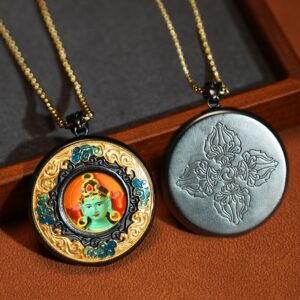
Hand-Painted Brass Auspicious Clouds Tsa-Tsa Thangka Pendant Necklace – 64cm Chain, Tibetan Buddhist Art Jewelry
Original price was: $49.00.$35.00Current price is: $35.00. -
Hand-Painted Tibetan Thangka Pendant Necklace – Sacred Buddhist Art with 60cm Cord
Original price was: $19.90.$16.90Current price is: $16.90. -
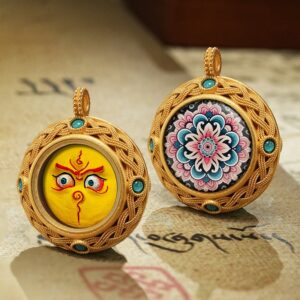
Handcrafted Five Wealth Deities Thangka Pendant – Brass Amulet (2.43cm x 2.95cm) with Turquoise Accents
Original price was: $39.00.$35.00Current price is: $35.00. -
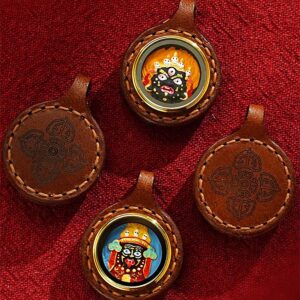
Handmade Leather Thangka Pendant with Fine Carved Design – 3D Buddha Art
Original price was: $29.00.$19.90Current price is: $19.90.

Looking forward to reading more from you.
This is a great resource. Thank you for sharing.