Author name: Novajewels

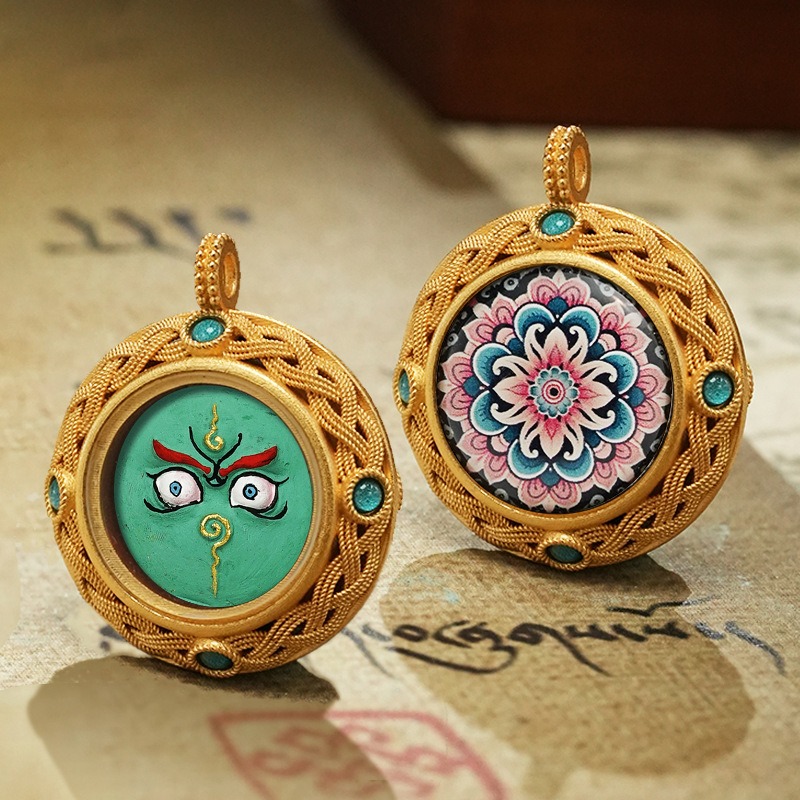
The Wisdom Eye in Tibetan Buddhism

The Wisdom Eye (Skt. prajñā-cakṣus; Tib. ye shes spyan), also known as the “Buddha Eye” or “Eye of Enlightenment,” is a core symbol representing omniscient wisdom and awakened awareness. Its significance unfolds across multiple dimensions: I. Symbolic Meanings of Five-Colored Wisdom Eyes II. Functional Comparison of Five-Colored Wisdom Eyes Color Core Symbolism Representative Deity Primary […]

The Wisdom Eye in Tibetan Buddhism Read More »
The Five Wealth Deities in Thangka Art

The Five Wealth Deities in Thangka Art

Rooted in the ancient Indian deity Kubera, the Five Wealth Deities (Five Jambhalas) transformed upon entering Tibet into emanations of the Five Wisdom Buddhas. Each deity uniquely represents a cardinal direction, natural element, and spiritual virtue. Within Thangka paintings, their iconography synthesizes Vajrayana rituals and Himalayan artistic traditions, serving as sacred embodiments of both material

The Five Wealth Deities in Thangka Art Read More »

What are the main deities of Thangka?

Tangka, as a carrier of Tibetan Buddhist art, has a complex and rigorous system of deities, mainly divided into categories such as Buddha, Bodhisattva, Bodhisattva, Protector, and Tara. The following are the names, image features, and symbolic meanings of common deities in thangka. 🙏I. Buddha Figures 🌸 II. Bodhisattvas ⚔️ III. Yidams (Meditational Deities) & Protectors 🕊️ IV.

What are the main deities of Thangka? Read More »

Is the Name “Thangka” Related to the Tang Dynasty? How Did the Name “Thangka” Evolve?

The name “Thangka” is not directly related to the Tang Dynasty, despite sharing the same Chinese character “唐” (Táng). The meanings and origins of the two are entirely different. Below is a detailed explanation of the name “Thangka”: 1. The Relationship Between “Thangka” and the Tang Dynasty 2. The Evolution and Origin of the Name “Thangka” 3. Controversies

Is the Name “Thangka” Related to the Tang Dynasty? How Did the Name “Thangka” Evolve? Read More »

The Origins of Tibetan Buddhist Deities

The origins of Tibetan Buddhist deities stem from a complex fusion of Indian Buddhist tantra and indigenous Tibetan Bon religion, characterized by cultural assimilation and religious transformation. Below is a systematic breakdown of their historical development: 1. Bon Foundation: Animistic Nature Worship Tibetan Buddhist deities trace their roots to the primal Bon religion, which worshipped

The Origins of Tibetan Buddhist Deities Read More »

The Meaning and Symbolism of Thangka

Thangka, as the quintessence of Tibetan Buddhist art, embodies a profound symbolic system that integrates religious philosophy, cultural significance, and spiritual aspirations through imagery, colors, and motifs. Below is a comprehensive analysis based on multiple sources: 1. Religious Symbolism: The Visualization of Buddhist Teachings 2. Cultural Significance: A Fusion of Traditions 3. Spiritual Purpose: A

The Meaning and Symbolism of Thangka Read More »

The Relationship Between Thangka and Buddhism

1. Core Religious Functions 2. Artistic and Doctrinal Fusion 3. Historical Symbiosis 4. Societal and Psychological Roles Conclusion Thangkas are both “visual scriptures” of Tibetan Buddhism and masterpieces of cross-cultural art. Their spiritual, aesthetic, and educational dimensions make them key to understanding Tibetan heritage. Recognized as China’s intangible cultural heritage in 2006, thangkas continue to

The Relationship Between Thangka and Buddhism Read More »

Shopping Cart
Scroll to Top